Six European territories in the middle of the Dot Rural project: stakeholder mapping in partner rural areas concluded.
The project involves six partners from different European countries, united by the common goal of supporting the digital transformation of tourism in rural areas. In recent months, one of the project's central activities concerned the mapping of the territories involved and the identification of local stakeholders, a fundamental step for understanding the needs, skills, and opportunities related to the digitalization of tourism in rural areas.
This phase allowed for an in-depth analysis of six European rural areas, each characterized by different territorial, cultural, and tourism specificities. Despite the differences between local contexts, all territories share some common challenges, such as the need to strengthen the digital skills of tourism operators and improve the visibility and management of destinations through technological tools.
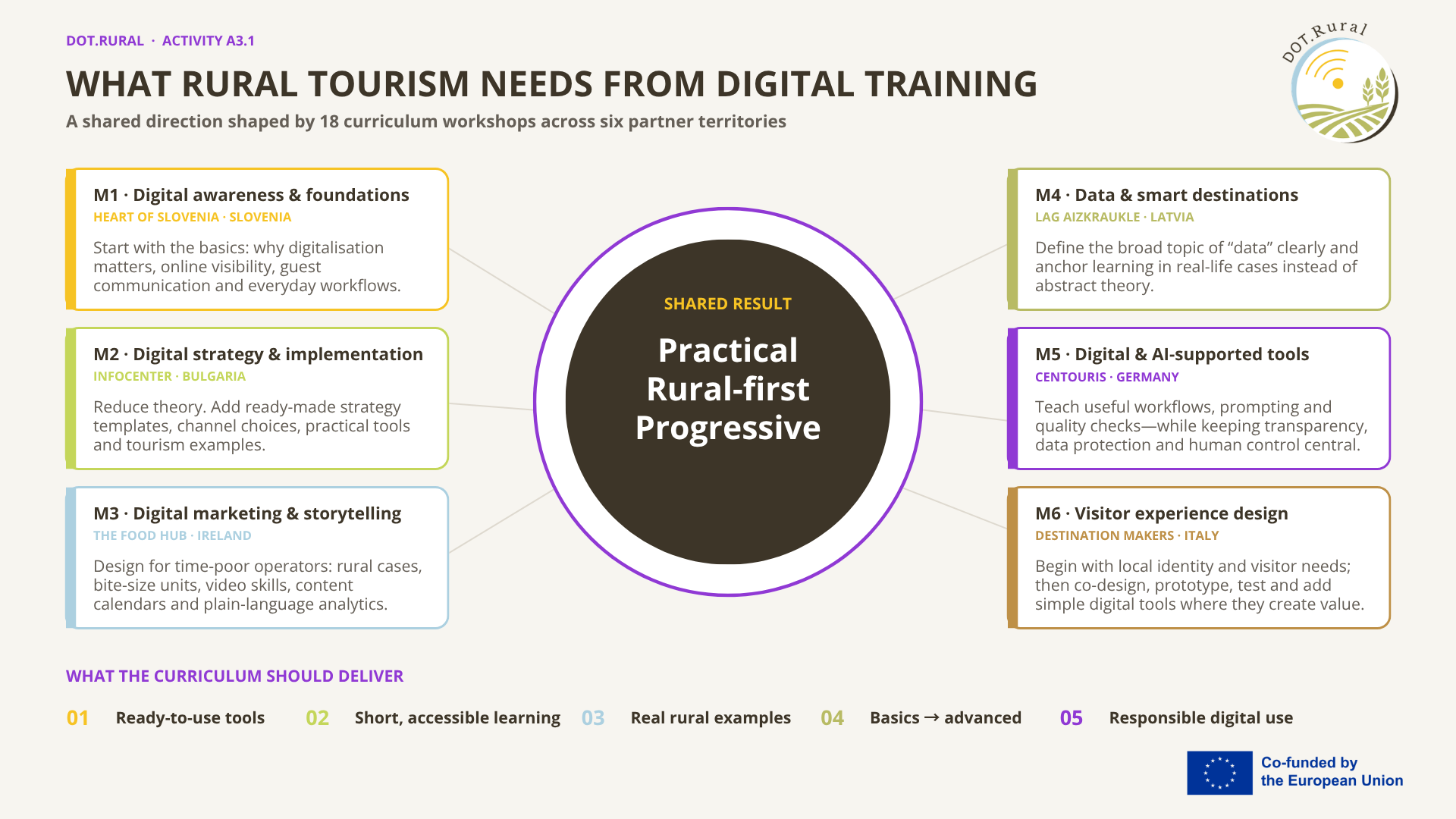
The work was carried out through a process of listening and direct involvement of local actors. In each partner territory, various field activities were organized, including dedicated workshops, meetings with tourism operators, local administrations, associations, and territorial organizations. These moments of discussion allowed for the creation of an open dialogue space with local communities and those who work daily in the development of rural tourism destinations.
In parallel, the project partners conducted interviews and qualitative information gathering activities, with the aim of identifying the main digital needs of the territories. This process allowed for the collection of a detailed overview of the digital skills present in the destinations involved, as well as the challenges and opportunities that digital transformation can offer for the development of rural tourism.
Among the themes that emerged most frequently are the need to strengthen the online presence of destinations, improve the digital promotion of local tourism experiences, and facilitate access to information for visitors through digital tools and platforms. At the same time, many territories highlighted the potential of digital technologies in fostering greater collaboration between local operators and building more integrated and sustainable tourism ecosystems.
The discussion with stakeholders also made it possible to identify some common challenges among the various partner countries, such as the fragmentation of the tourism offer, the difficulty of accessing advanced digital tools, and the need to develop specific skills related to digital communication and data management.
Alongside the critical issues, the mapping also highlighted numerous opportunities. The territories involved have a natural and cultural heritage of great value, often still little known internationally, but with strong potential for the development of sustainable, slow, and authentic forms of tourism.
Mapping and listening activities therefore represent a fundamental basis for the next phases of the project, which will be dedicated to the development of tools, digital solutions, and pilot actions designed to respond concretely to the needs that emerged in the partner territories.
The project involves six European rural areas where workshops, stakeholder meetings, and territorial analysis:
Italy – Inner Area Medio Agri (Province of Potenza)
Latvia – territory of the Aizkraukle District Partnership, which includes the rural areas of the Municipality of Aizkraukle and the parishes of Kurmene and Valle in the Municipality of Bauska
Germany – rural area of the Passau region
Bulgaria – territory of the Municipality of Tryavna
Ireland – North-Western area of Ireland (counties of Leitrim, Sligo, and Roscommon)
Through the comparison between these territories and the exchange of experiences between European partners, the project aims to promote the dissemination of good practices and the development of new digital skills, contributing to strengthening the capacity of European rural destinations to face the challenges of digital transformation in tourism.