Over the past month, the DOT.Rural partnership has been working on one of the central phases of the project: the development of the training curriculum dedicated to the digitalisation of rural tourism. This work represents the heart of the project, translating previous insights into a structured learning path for DMOs, rural tourism operators and local stakeholders.
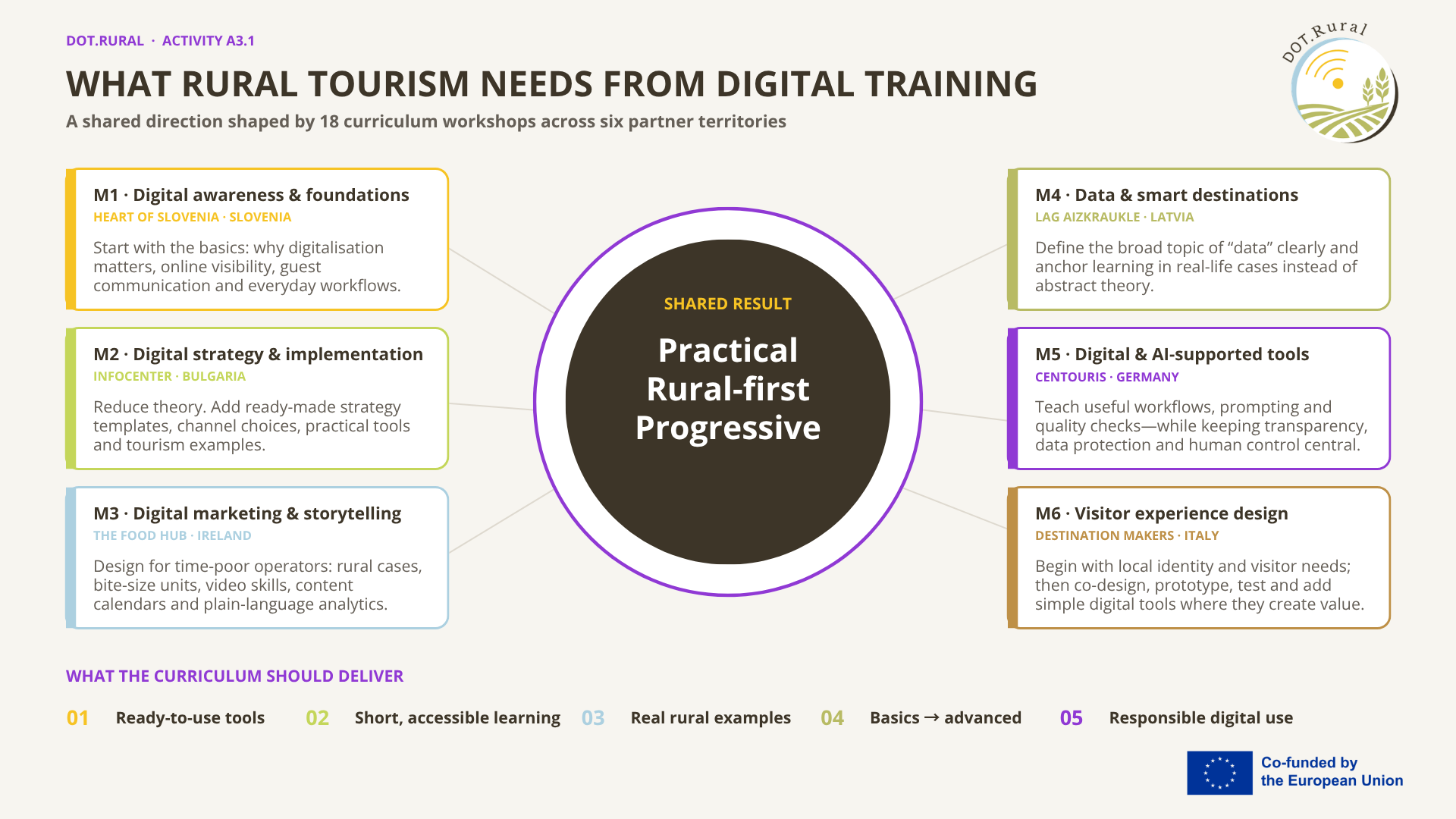
The curriculum is organised into six training modules, each assigned to a responsible partner: Digital Transformation in Rural Tourism to DCHS; Digital Strategy & Implementation to Infocenter; Digital Marketing & Storytelling to The Food Hub; Data & Smart Destination Management to LAG Aizkraukle; Digital & AI Tools for Tourism to the University of Passau; and Visitor Experience Design to Destination Makers. Each responsible partner will be supported by another organisation from the consortium, ensuring complementary expertise and a shared European approach.
Together, the modules will offer a 360-degree learning journey, connecting the main strategic, digital and experiential dimensions of rural tourism.
A key element defined during this phase is the Learning Outcome Matrix, which translates each module into clear learning outcomes. For each module, it defines what DMOs and rural tourism stakeholders are expected to understand, what they should be able to do, and how they can apply the acquired competences in their professional contexts.
The curriculum has been designed to be flexible and practice-oriented, helping participants use digitalisation in their daily work to improve visibility, management, collaboration and visitor experience.
This work will be further enriched through the local curriculum workshops, where partners will engage with DMOs, tourism operators and local stakeholders to further align the training path with territorial needs.